
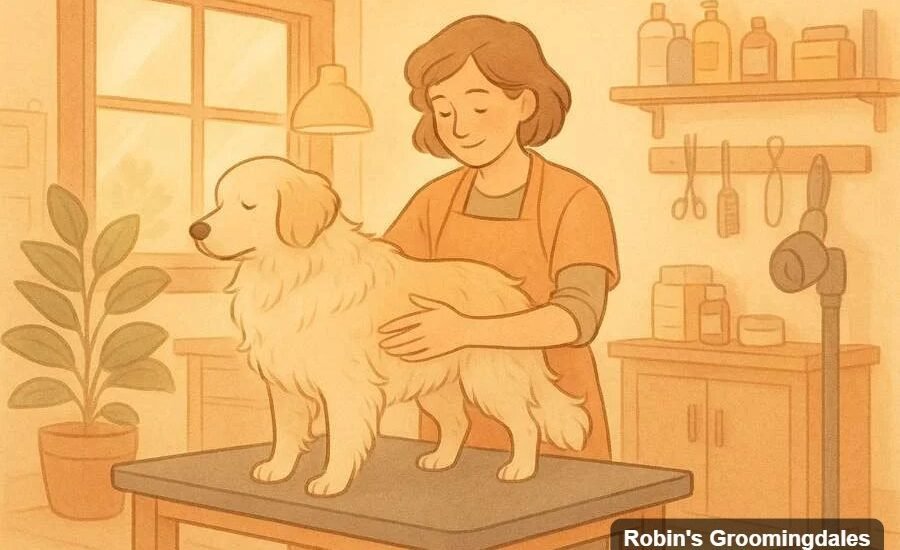
Your dog’s groom doesn’t start with clippers or shampoo. It starts with ten minutes nobody sees, a quiet check that happens before any tool comes out. If drop-off has ever taken a little longer than you expected, this is why.
Robin’s Groomingdales in Dunwoody has run some version of this routine since 1980. Skip it, and a groom that should go smoothly can turn into a much harder appointment fast.
What We Do Before Any Clipper Touches Your Dog
Every dog gets a hands-on coat, skin, and temperament check before grooming begins. A groomer runs their hands over the coat looking for mats, feels the skin for hot spots or lumps, checks ears and paws, and reads how the dog is feeling that day. This takes about ten minutes. It decides which tools get used, how long the groom will take, and whether the plan needs to change on the spot.
Checking the Coat and Skin for Mats, Hot Spots, and Sensitivities
Mats hide close to the skin, especially behind the ears, under the front legs, and around the tail. These are spots a brush at home can easily miss. A groomer works through the coat section by section instead of a quick glance, because a mat that looks minor from the top can be pulling tight against the skin underneath. Skin gets checked at the same time. Redness, hot spots, dry patches, or anything irritated changes how, or whether, that area gets clipped that day. Catching a hot spot before shampoo touches it saves the dog real discomfort, and it shows up far easier in the first ten minutes than halfway through a bath.
Reading Your Dog’s Temperament Before the Groom Begins
Coat isn’t the only thing being assessed. A groomer also watches how the dog is holding their body at drop-off, and how they respond to being handled around paws, ears, and tail, the three spots that tend to bother a nervous dog most. A dog who seems anxious that day gets a slower pace, more breaks, or a different groomer pairing than usual. This is also where a dog gets matched to whichever groomer on staff tends to work best with that particular temperament. Some dogs settle faster with a calm, slow approach. Others do fine with someone brisker and more matter-of-fact. That match gets decided here, before the groom starts, not worked out midway through.
What Happens If the Check Turns Up a Problem
Sometimes the check finds something that changes the plan. A mat too close to the skin to brush out safely might mean a shorter clip in that one spot instead of forcing a brush through it. A hot spot or irritated patch might mean that area gets skipped or handled with a gentler product. If something looks like it needs a veterinarian’s attention, a lump that wasn’t there before, or skin that looks more than just dry, we’ll say so at drop-off rather than groom around it and stay quiet. Most of the time the check confirms everything is straightforward and the groom proceeds as planned. When it doesn’t, you hear about it before we start, not after.
Why This Routine Runs on Every Visit, Not Just for New Clients
Skipping this step for regular clients and starting straight in with the clippers would save time. We don’t, because a dog’s coat and health can change between visits in ways that aren’t obvious from the outside. A dog that was fine six weeks ago might arrive with a new hot spot from seasonal allergies, a mat that formed after a week at the lake, or just a rougher day than usual. Treating every visit as if nothing has changed is how small issues get missed. Ten minutes of checking catches problems while they’re still small, for the dog and for how the rest of the appointment goes.
What First-Time Clients Can Expect
If this is your first visit, expect the check to happen right at drop-off, in front of you if you’d like to watch. It’s a good time to mention anything you’ve noticed at home: a spot your dog scratches more than usual, a mat you couldn’t work out, or a groomer preference from a past appointment somewhere else. That information folds directly into the plan for that day. It also means a first appointment can take a little longer than a return visit, since there’s no grooming history yet to draw on.
What This Means for Your Next Appointment in Dunwoody
If your dog’s drop-off includes a few extra minutes of a groomer running their hands through the coat and checking things over, that’s this routine, part of the same process, not a delay. It’s how Robin’s Groomingdales has approached grooming since 1980: check first, then groom, so the plan fits the dog in front of us that day.
Noticed a mat, a dry patch, or a spot that seems more sensitive than usual since your dog’s last visit? Mention it at drop-off. It folds straight into this same check.