
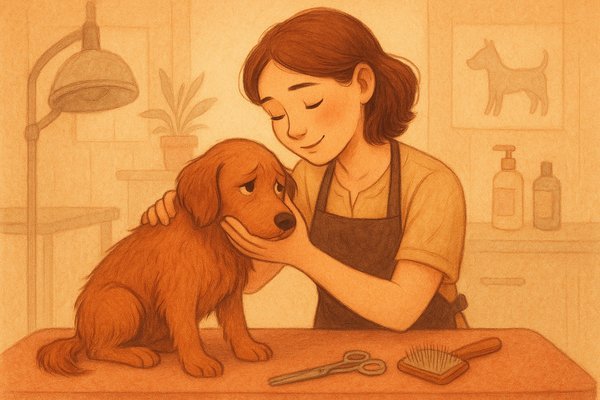
If your dog whimpers on the way to the groomer, trembles on the table, or has ever snapped at scissors or clippers, you know how stressful grooming appointments can be — for your dog and for you. Grooming anxiety in dogs is far more common than most owners realize, and it’s one of the most frequent concerns we hear at Robin’s Groomingdales in Dunwoody, GA. The great news is that grooming anxiety is manageable, and with the right approach, even the most nervous dogs can learn to tolerate — and sometimes even enjoy — their grooming appointments.
This guide walks Dunwoody dog owners through everything you need to know about why dogs become anxious during grooming, how to recognize it, what you can do at home to help, and how professional groomers approach sensitive clients.
Why Do Dogs Develop Grooming Anxiety?
Grooming anxiety rarely comes out of nowhere. Most cases trace back to one or more of these root causes:
- A traumatic early experience: A painful nail cut, a rough handling incident, or an overwhelming first visit can leave a lasting negative association with the grooming environment.
- Lack of early socialization: Dogs that weren’t introduced to handling, tools, and salon sounds as puppies are more likely to find the experience overwhelming as adults.
- Sensitive temperament: Some breeds — including Chihuahuas, Border Collies, Bichon Frises, and rescue dogs with unknown histories — are simply more prone to anxiety by nature or background.
- Painful underlying conditions: Arthritis, skin irritation, ear infections, or matted coats can make grooming physically uncomfortable, causing a dog to associate the salon with pain.
- Owner anxiety transfer: Dogs are exquisitely sensitive to human emotions. If you feel nervous or guilty dropping your dog off, they pick up on it — and it amplifies their own fear response.
Signs Your Dog Has Grooming Anxiety
Some signs of stress are obvious; others are subtle and easy to miss. Watch for:
- Pre-salon: Trembling, excessive panting, drooling, yawning, or trying to hide when you pick up the leash or get in the car toward the groomer
- Arrival: Refusing to enter the building, pulling hard to leave, whining or barking, tail tucked firmly between the legs
- On the table: Constant fidgeting, trying to jump off, whale eye (showing whites of eyes), lip licking, freezing completely still
- Escalated responses: Growling, snapping, or biting at tools or hands — this is a dog communicating fear, not aggression in the traditional sense
- Post-visit: Prolonged hiding, excessive sleeping, or clinginess after returning home are signs the visit was more stressful than it appeared
What You Can Do at Home to Reduce Grooming Anxiety
Home preparation is one of the most powerful tools for anxious dogs. The more familiar grooming sensations feel, the less overwhelming the salon will be.
- Handle your dog daily. Touch their paws, lift their ears, open their mouth, and run your hands along their body — especially in sensitive spots. Do this gently and pair it with high-value treats every single time.
- Desensitize to tools gradually. Let your dog sniff clippers and scissors while they’re off. Turn clippers on near — not touching — your dog. Reward heavily for calm responses. Work up to gentle contact over days or weeks, not hours.
- Practice restraint kindly. Hold your dog gently in grooming-like positions for a few seconds, release, and reward. This helps them understand that being held doesn’t mean something bad is coming.
- Make car rides positive. If the car only means vet or groomer, your dog may start anticipating stress before you even arrive. Take regular fun car trips to places your dog enjoys.
- Use calming aids if appropriate. Some dogs benefit from vet-recommended calming supplements, anxiety wraps (like ThunderShirts), or even prescribed anti-anxiety medication for grooming days. Talk to your veterinarian about what might be appropriate for your dog’s level of anxiety.
- Keep your own energy neutral. Drop offs should be matter-of-fact, not drawn out. Long, emotional goodbyes increase your dog’s anxiety. A calm, confident handoff signals that everything is fine.
How Professional Groomers Handle Anxious Dogs
Experienced groomers who work regularly with anxious dogs use a range of techniques to reduce stress and make appointments as comfortable as possible. At Robin’s Groomingdales, our approach to nervous clients includes:
- Slow introductions: We don’t rush into grooming. We take time to let anxious dogs smell our hands, explore the space, and settle before we begin.
- Shorter, more frequent sessions: For very anxious dogs, we may recommend splitting grooming into two shorter visits rather than one long session — for example, bath and dry on one day, trim on another. Shorter sessions mean less cumulative stress.
- Low-stress handling techniques: We use minimal restraint, prefer positive reinforcement over physical correction, and read body language constantly to know when a dog needs a break.
- Quiet scheduling: When possible, we can schedule anxious dogs during quieter salon hours to reduce noise stimulation from other dogs and equipment.
- Transparent communication: We always let owners know how their dog responded during the visit — what went well, what was difficult, and what we can adjust next time.
We also work closely with owners to understand each dog’s history. The more you can tell us about your dog’s specific triggers, past experiences, and what helps them feel safe, the better we can tailor the experience.
When Grooming Anxiety Requires Veterinary Involvement
In some cases, grooming anxiety is severe enough that no amount of patience or technique is sufficient without veterinary support. If your dog has ever bitten or drawn blood during grooming, cannot be groomed safely at all, or is causing themselves harm trying to escape, please speak with your veterinarian. Options may include:
- Prescription anti-anxiety medication taken before grooming appointments (not sedation, but gentle calming)
- Referral to a veterinary behaviorist for a structured desensitization program
- Grooming under sedation performed at a veterinary clinic for dogs who cannot safely be groomed any other way
There is no shame in needing extra help. Our goal — and your vet’s goal — is always the same: a dog who is safe, healthy, and as comfortable as possible.
Book a Low-Stress Grooming Appointment in Dunwoody
At Robin’s Groomingdales, we genuinely love nervous dogs. We know that behind every anxious pup is an owner who cares deeply — and we’re here to make grooming a positive experience for both of you. Whether your dog is mildly nervous or has had difficult grooming experiences in the past, we’ll work with you and your pet to find an approach that works.
Visit us at 2482 Jett Ferry Rd, Dunwoody, GA 30338, call (770) 396-8902, or book online at robinsgroomingdales.us. We’re open Monday through Saturday, 8:30 AM to 3:00 PM. Your nervous pup is always welcome here.