
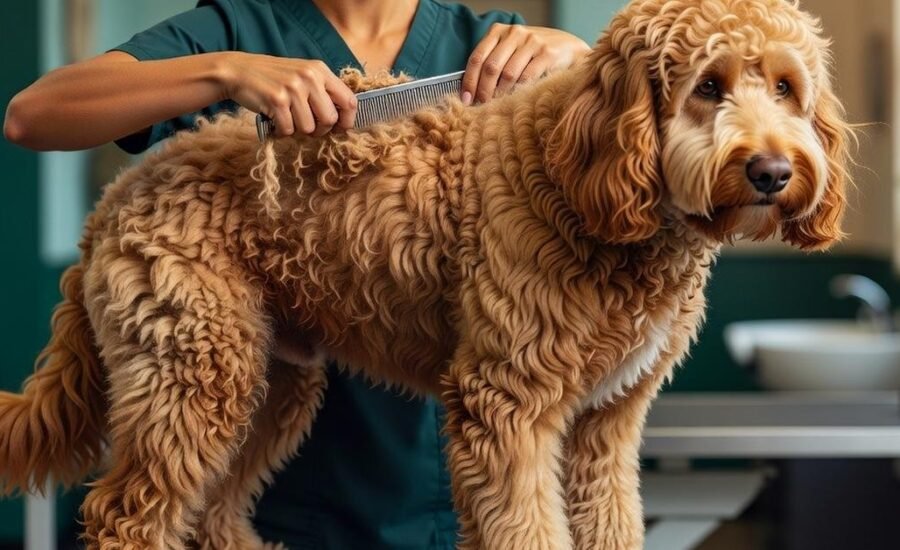
If you’ve ever had to watch a groomer shave a matted dog down to the skin, you know how upsetting it is — for the owner and the dog. Mats aren’t just an aesthetic problem. They pull on the skin, restrict circulation, hide wounds and infections, and cause genuine pain with every movement. In Dunwoody and the broader Atlanta area, Georgia’s summer heat and humidity dramatically accelerate mat formation. The good news: mats are almost entirely preventable with the right routine, the right tools, and regular professional grooming. Here’s everything you need to know.
Why Do Dogs Get Mats?
Mats form when loose, dead hair gets trapped in the living coat and begins to tangle around healthy strands. Left unbrushed, the tangle grows tighter — picking up more hair, debris, and moisture — until it forms a dense, felt-like clump pressed against the skin. In severe cases, mats cover large portions of the body and must be shaved off entirely, a process that is both stressful and sometimes medically necessary.
Several factors accelerate mat formation:
- Humidity — Moisture causes hair to swell and curl, making tangles more likely. Georgia summers are particularly brutal for curly and wavy-coated dogs.
- Friction — Areas where the coat rubs against itself or against collars, harnesses, and furniture are mat hotspots: behind the ears, the armpits, the groin, and under the collar.
- Swimming and bathing without drying — Water loosens coat, and if the dog isn’t brushed before and after getting wet, tangles form as the coat dries in a tangled position.
- Shedding seasons — Spring and fall, when dead coat releases in bulk, dramatically increases mat risk if the loose hair isn’t brushed out.
- Coat type — Curly, wavy, and double-coated breeds mat significantly faster than short or smooth-coated dogs.
Which Breeds Are Most Prone to Matting?
Any dog with a long, curly, or wavy coat is at elevated risk. The most commonly matted breeds we see at Robin’s Groomingdales include:
- Doodles (Goldendoodles, Labradoodles, Aussiedoodles) — The combination of poodle and retriever coat makes for dense, curly fur that mats extremely fast without consistent brushing
- Poodles and Poodle mixes — Curly coats trap every shed hair rather than releasing it, requiring near-daily attention
- Cocker Spaniels — Silky, feathered coats mat quickly in friction zones
- Shih Tzus, Maltese, and Yorkshire Terriers — Long, fine coats tangle easily
- Bernese Mountain Dogs and other double-coated breeds — The dense undercoat can mat into a thick layer if not deshedded regularly
The Right Brushing Tools for Your Dog’s Coat
Using the wrong tools makes brushing less effective — and won’t prevent mats. Here’s what to use for each coat type:
Curly and Wavy Coats (Doodles, Poodles, Spaniels)
- Slicker brush — Fine wire bristles that work through tangles effectively. Use in the direction of hair growth with gentle, short strokes.
- Metal greyhound comb — Run this through after the slicker brush. If the comb meets no resistance from root to tip, the coat is truly mat-free. This is the test.
- Dematting rake or comb — For catching early-stage tangles before they become true mats.
Double-Coated Breeds (Golden Retrievers, German Shepherds, Huskies)
- Undercoat rake — Penetrates to the undercoat to remove loose, dead fur before it mats
- Slicker brush — For the top coat and finishing
- Metal comb — For checking friction zones thoroughly
Long-Coated Breeds (Shih Tzu, Maltese, Yorkie)
- Pin brush — Gentler than a slicker, appropriate for fine, silky coats
- Metal comb — Essential for fine coats that tangle at the root
- Fine-toothed finishing comb — For face, ears, and leg feathering
How Often Should You Brush?
Brushing frequency depends on coat type and lifestyle, but here are general guidelines:
- Curly and wavy coats (doodles, poodles): 4–5 times per week minimum. Daily during shedding season or summer humidity.
- Long, silky coats (shih tzu, maltese): Daily. These fine coats tangle at the root quickly.
- Double coats (retrievers, shepherds): 3–4 times per week; daily during shedding season.
- Short, smooth coats (beagles, boxers): Weekly is sufficient; these coats rarely mat.
A brushing session doesn’t have to be long — 5–10 minutes of focused work several times per week is far more effective than a 45-minute session once a month when tangles have already formed.
The Friction Zones: Where to Check Every Week
Even dogs who are brushed regularly develop mats in specific high-friction areas that are easy to miss. Check these zones every time you brush:
- Behind the ears — The most common mat location in almost every breed. The ear flap rubs the fur against the neck constantly.
- Armpits — Every step creates friction in this area. Hard to access, easy to forget.
- Under the collar and harness — Consider removing these for part of each day to reduce friction.
- Groin area — Where the rear legs meet the body, another high-friction zone.
- Paw feathering and tail — Long fur on paws and tails tangles from contact with grass, debris, and the ground.
Detangler Spray: A Brushing Essential
Never brush a completely dry, dirty coat — the friction increases and you’re more likely to break the hair or cause discomfort. A light mist of dog-safe detangler spray before brushing softens the coat, reduces static, and makes tangles release more easily. This is especially important in Dunwoody’s dry winter months and for particularly curly coats.
Avoid human detangler sprays, which aren’t formulated for dog coat pH and can cause skin irritation.
What NOT to Do When You Find a Mat
When you discover a mat, resist the temptation to cut it out with scissors. This is one of the most common causes of serious accidental injuries we see referred from home grooming attempts. The skin of a matted dog is often pulled up tightly against the base of the mat — the gap between mat and skin is minimal, and scissors can cut deeply before the owner realizes the skin is there.
Instead:
- Apply detangler or coconut oil to the mat and let it sit for a few minutes
- Work from the edges of the mat with a dematting comb, pulling small sections free
- Hold the base of the mat firmly with your fingers to prevent pulling the skin
- If the mat is tight against the skin, large, or covering a sensitive area — stop and call your groomer
When to Call a Professional Groomer
Some mats are beyond home management. Signs that a mat needs professional attention:
- The mat is sitting directly against the skin
- The mat covers a large area
- Your dog flinches, snaps, or cries when you touch it
- The skin beneath the mat looks red, irritated, or smells unusual
- The mat has been there for more than a week or two
At Robin’s Groomingdales, we’re experienced in safe, humane mat removal. In some cases, shaving is the kindest option — but we always assess the situation carefully and discuss options with owners before proceeding. We can also show you how to brush your specific dog’s coat more effectively during your appointment.
The Best Mat Prevention: Regular Grooming Appointments
Consistent professional grooming every 6–8 weeks is the single most effective mat prevention strategy for long and curly-coated dogs. At each appointment, we remove dead coat buildup before it tangles, address any early mats, and advise you on home care for your specific dog’s coat. Most severe matting cases we see are dogs who’ve gone 3–6 months without professional grooming — catching it earlier makes all the difference.
Book at Robin’s Groomingdales in Dunwoody
Located at 2482 Jett Ferry Rd in Dunwoody, GA, Robin’s Groomingdales serves Dunwoody, Sandy Springs, and the greater Atlanta area with expert grooming for all coat types. If your dog’s coat has gotten ahead of you, or if you want to set up a regular schedule to prevent matting, we’re here to help.
Book your appointment online at robinsgroomingdales.us or call us at (770) 396-8902. We’re open Monday through Saturday, 8:30 AM to 3:00 PM.
A few minutes of brushing a few times a week is all it takes — your dog’s coat will thank you.