
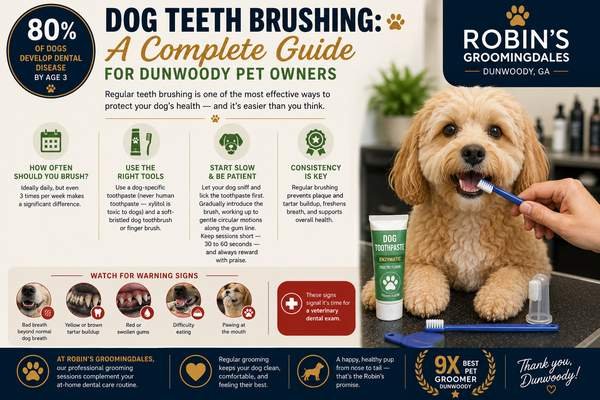
If your dog’s breath could knock you off your feet, you’re not alone — but that smell isn’t just unpleasant, it’s a warning sign. According to the American Veterinary Medical Association, 80% of dogs show signs of dental disease by age three. The good news? Regular teeth brushing at home can dramatically reduce your dog’s risk of painful dental problems, expensive vet bills, and systemic health issues linked to oral bacteria.
This guide walks Dunwoody pet owners through everything they need to know about brushing their dog’s teeth — from choosing the right tools to handling a dog who won’t cooperate.
Why Dog Dental Health Matters More Than You Think
Dental disease in dogs isn’t just about bad breath and yellow teeth. When bacteria from plaque and tartar enter the bloodstream through inflamed gum tissue, they can damage the heart, kidneys, and liver. Studies show that dogs with severe periodontal disease have a significantly higher risk of heart disease — specifically damage to the mitral valve.
Beyond systemic health, dental pain affects your dog’s quality of life. A dog with a painful mouth may eat less, become irritable, or stop enjoying activities they once loved. Unfortunately, dogs are stoic animals and often hide pain until it becomes severe.
How Often Should You Brush Your Dog’s Teeth?
The gold standard is daily brushing. This sounds demanding, but a proper brushing session takes only 1–2 minutes once your dog is comfortable with the routine. If daily isn’t realistic, aim for at least 3 times per week — this is the minimum frequency shown to prevent significant tartar buildup.
Brushing less than twice a week provides limited benefit, as plaque begins hardening into tartar within 24–48 hours.
Choosing the Right Tools
Toothpaste
Never use human toothpaste on dogs. Human toothpastes contain fluoride and xylitol — both toxic to dogs. Use enzymatic dog toothpaste, which comes in flavors like poultry, beef, or peanut butter. The enzymatic formula continues breaking down bacteria even after you stop brushing, providing extra protection.
Toothbrush
You have several options:
- Angled dog toothbrush — designed to reach back teeth with less effort
- Finger brush — fits over your fingertip, great for getting used to the sensation
- Double-headed brush — cleans both sides simultaneously
For small breeds like Chihuahuas or Yorkies, use a smaller brush head. For large breeds, a standard adult brush works well.
Step-by-Step: How to Brush Your Dog’s Teeth
Week 1 — Introduction: Let your dog smell and lick the toothpaste off your finger. No brush yet. End with praise and a treat. Repeat daily for a week.
Week 2 — Finger massage: Apply toothpaste to your finger and gently rub it along your dog’s teeth and gum line. Let them get used to the sensation of something touching their gums.
Week 3 — Introduce the brush: Let your dog sniff and lick the toothbrush. Touch it gently to their teeth without brushing. Keep sessions under 30 seconds.
Week 4 and beyond — Full brushing: Use gentle circular motions along the outer surfaces of the teeth, focusing on the gum line. Work from front to back. Most dogs don’t need their inner tooth surfaces brushed — their tongue naturally keeps the inner side cleaner.
Tip: Always end on a positive note. If your dog gets stressed, stop and try again later. Never force the experience — negative associations will make future brushing harder.
For Dogs Who Hate Toothbrushing
Some dogs simply won’t tolerate a toothbrush. If that’s your situation, don’t give up on dental care entirely — try these alternatives:
- Dental wipes — textured wipes you rub along the gum line
- Water additives — tasteless solutions added to your dog’s water bowl that reduce bacteria
- Dental chews — VOHC (Veterinary Oral Health Council) approved chews like Greenies that mechanically scrub teeth
- Dental gels — applied directly to the gum line without brushing
These alternatives are less effective than brushing but far better than nothing.
Warning Signs: When to See the Vet
Even with regular brushing, schedule annual professional dental cleanings with your vet. Contact your vet sooner if you notice:
- Persistent bad breath that doesn’t improve with brushing
- Yellow, brown, or grey tartar buildup (especially near the gum line)
- Red, swollen, or bleeding gums
- Loose or missing teeth
- Difficulty chewing or dropping food
- Pawing at the mouth or face
- Sudden change in eating habits
How Professional Grooming Supports Dental Health
At Robin’s Groomingdales in Dunwoody, our grooming sessions are an opportunity for a full wellness check. Our experienced groomers notice early signs of dental issues — like unusual mouth odor or reluctance to have the face groomed — that owners often miss. We report any concerns we observe so you can follow up with your vet promptly.
Regular grooming also keeps your dog comfortable and cooperative, making at-home care like teeth brushing easier. A dog who is used to being handled, including having their mouth touched during grooming, is a dog who is more likely to tolerate a toothbrush at home.
Start Today
You don’t need to achieve perfection on day one. A consistent, positive routine — even three times a week — puts your dog miles ahead of the 80% who develop dental disease early. Pick up some dog toothpaste, start with your finger, and build from there.
Your dog can’t brush their own teeth. But with a little patience and the right technique, you can give them a healthier mouth, fresher breath, and a longer, more comfortable life.
Robin’s Groomingdales serves dogs in Dunwoody, Sandy Springs, and surrounding Atlanta communities. We’re located at 2482 Jett Ferry Rd, Dunwoody, GA 30338. Book your appointment at robinsgroomingdales.us or call (770) 396-8902. Open Monday–Saturday, 8:30 AM – 3:00 PM.