
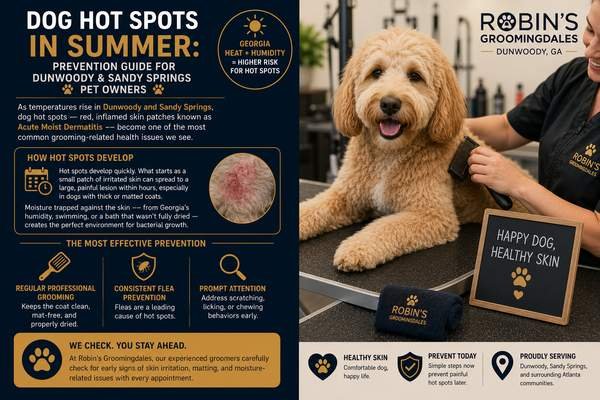
If you’ve ever watched your dog fixate on one spot — licking, chewing, or scratching relentlessly — you may be seeing the beginning of a hot spot. These painful, fast-moving skin lesions are one of the most common grooming-related health problems in dogs, and they peak every summer in Dunwoody, Sandy Springs, and across Georgia.
The good news: hot spots are largely preventable. This guide gives Dunwoody and Sandy Springs pet owners everything they need to understand, prevent, and respond to hot spots before they become a serious problem.
What Are Dog Hot Spots?
Hot spots — medically known as Acute Moist Dermatitis — are areas of inflamed, infected skin that develop rapidly. A hot spot typically starts as a small red patch but can expand to a large, moist, painful lesion within hours. They’re often hidden under the fur until they’re already well-established.
Common locations include the head, neck, hips, and the area under the ears — places where moisture collects and air circulation is poor. Dogs will instinctively lick, bite, and scratch the affected area, which spreads bacteria, removes protective fur, and causes the lesion to grow quickly.
Why Summer Increases Hot Spot Risk
Hot spots can occur year-round, but Georgia summers create the perfect storm of risk factors:
- Heat and humidity — Warm, moist air creates an ideal environment for bacterial growth on the skin surface
- Swimming and water exposure — Moisture trapped against the skin after lake, pool, or sprinkler play is a leading hot spot trigger
- Seasonal allergies — Grass, pollen, and mold spike in late spring and summer in the Dunwoody area, causing itchiness that leads to scratching and secondary hot spots
- Fleas and insects — Flea populations peak in summer; a single flea bite can trigger an allergic reaction that spirals into a hot spot
- Coat matting — Humid weather accelerates matting, and matted fur traps moisture and bacteria against the skin
Common Causes of Hot Spots
Understanding what triggers hot spots helps you target the right prevention strategies:
- Allergies — Environmental allergies (grass, pollen, dust mites) or food allergies cause chronic itchiness that leads dogs to scratch until the skin breaks
- Flea allergy dermatitis — One of the most common hot spot triggers; even a single flea bite causes intense itching in sensitive dogs
- Ear infections — Dogs with chronic ear problems scratch near the ears, creating hot spots on the head and neck
- Moisture — A dog that wasn’t fully dried after a bath or swim is at elevated risk, especially in thick-coated breeds
- Matted or overgrown coat — Mats prevent airflow and trap sweat, debris, and bacteria against the skin
- Boredom, stress, or anxiety — Dogs who are bored or anxious will over-groom, leading to self-inflicted skin damage
- Anal gland issues — Dogs scooting or chewing near their base due to impacted anal glands often develop secondary hot spots
Warning Signs to Watch For
Catching a hot spot early makes treatment much easier. Watch for:
- A specific area your dog constantly licks, bites, or scratches
- Moist, red, or raw-looking skin beneath the fur
- A patch of fur that looks wet, matted, or discolored
- An unpleasant odor coming from one area of the coat
- Visible skin inflammation or a wet, oozing lesion
- Behavior changes — restlessness, irritability, or sensitivity when you touch a certain area
Don’t wait to see if it goes away on its own. Hot spots worsen rapidly and are painful for your dog. Early intervention — within hours of noticing the first signs — prevents a minor irritation from becoming a serious wound.
5 Proven Prevention Strategies
1. Regular Professional Grooming
Regular grooming is the single most effective tool for hot spot prevention. A clean, properly maintained coat dries faster, mats less, and gives bacteria fewer places to thrive. At Robin’s Groomingdales in Dunwoody, our groomers check for early signs of skin irritation, matting, and moisture-related issues with every appointment. Catching a problem early — before it becomes a hot spot — saves your dog pain and you a vet bill.
2. Thorough Drying After Water Exposure
After every swim, bath, or rain walk, dry your dog completely — not just the surface, but all the way down to the skin. For thick-coated breeds like Golden Retrievers, Bernese Mountain Dogs, or Doodles, use a high-velocity dryer or handheld blower on low heat. Pay special attention to the neck, armpits, and groin, where moisture collects. If you can’t fully dry your dog at home, a professional bath and blow-dry at Robin’s Groomingdales ensures the coat is completely dry before your pet goes home.
3. Consistent Flea and Tick Prevention
Year-round flea prevention is non-negotiable for Dunwoody and Sandy Springs dogs, especially through summer. Flea allergy dermatitis is one of the top hot spot triggers, and even a few bites can send a sensitive dog into a scratching spiral. Talk to your vet about the most effective prevention option for your dog’s lifestyle.
4. Address Allergies Early
If your dog has seasonal allergies, don’t wait for a hot spot to appear. Talk to your veterinarian about antihistamines, medicated shampoos, or allergy management strategies. Wiping your dog’s paws and belly after outdoor time removes pollen and allergens before they cause itching — particularly important during Dunwoody’s spring and summer allergy season.
5. Brush Regularly Between Appointments
Brushing your dog two to three times per week removes loose fur, prevents matting, and distributes natural oils that protect the skin. It also gives you the opportunity to feel for any unusual areas — bumps, moisture, or sensitivity — that might indicate a developing skin problem.
When to See a Vet
Not all hot spots require a vet visit — mild cases can often be managed at home with proper clipping, cleaning, and topical treatment. However, contact your veterinarian if:
- The lesion is large (bigger than a quarter) or expanding rapidly
- Your dog is in significant pain or won’t let you touch the area
- The hot spot is near the eye, ear canal, or paw
- You see pus, significant discharge, or deep tissue involvement
- Your dog has had multiple hot spots in a short period
- The hot spot doesn’t improve within two to three days of home treatment
Your vet may prescribe topical or oral antibiotics, a short course of steroids to reduce inflammation and stop the itch cycle, or recommend further testing if allergies are suspected as the underlying cause.
Breeds at Higher Risk
While any dog can develop a hot spot, certain breeds are more susceptible due to their coat type, skin folds, or tendency toward allergies:
- Golden Retrievers and Labrador Retrievers — thick, dense coats that trap moisture; very common hot spot patients
- German Shepherds and Rottweilers — prone to allergies; often develop hip and base-of-tail hot spots
- Doodles and Poodle mixes — curly coats that mat quickly if not groomed regularly
- Saint Bernards and Newfoundlands — heavy coats with limited airflow
- Any dog that swims frequently — regardless of breed, water exposure dramatically increases risk without proper drying
If your dog falls into one of these categories, consider shortening the time between professional grooming appointments during peak summer months in Dunwoody and Sandy Springs.
How Robin’s Groomingdales Helps Prevent Hot Spots
At Robin’s Groomingdales, with over 35 years serving dogs in Dunwoody, Sandy Springs, and the greater Atlanta area, our groomers are trained to:
- Identify early signs of skin irritation and alert owners before lesions develop
- Clip and clean around problem areas to improve airflow to the skin
- Ensure thorough, complete drying with professional-grade equipment
- Remove mats that trap moisture and bacteria against the skin
- Tailor grooming schedules to each dog’s coat type, breed, and individual risk factors
We’re proud to be a 9-time winner of Best Pet Groomer in Dunwoody, with a 4.9-star rating from more than 163 Google reviews. Our clients trust us to keep their dogs comfortable, healthy, and well-maintained year-round.
Your Dog Deserves a Comfortable Summer
Hot spots are painful, stressful for your dog, and frustrating for pet owners. But with the right prevention strategy — regular professional grooming, thorough drying, flea prevention, and attention to early warning signs — most dogs can get through even a humid Georgia summer without a single hot spot.
Robin’s Groomingdales has been Dunwoody and Sandy Springs’s trusted pet grooming salon since 1987. We’re located at 2482 Jett Ferry Rd, Dunwoody, GA 30338. Book your appointment at robinsgroomingdales.us/bookings or call (770) 396-8902. Open Monday–Saturday, 8:30 AM – 3:00 PM.