
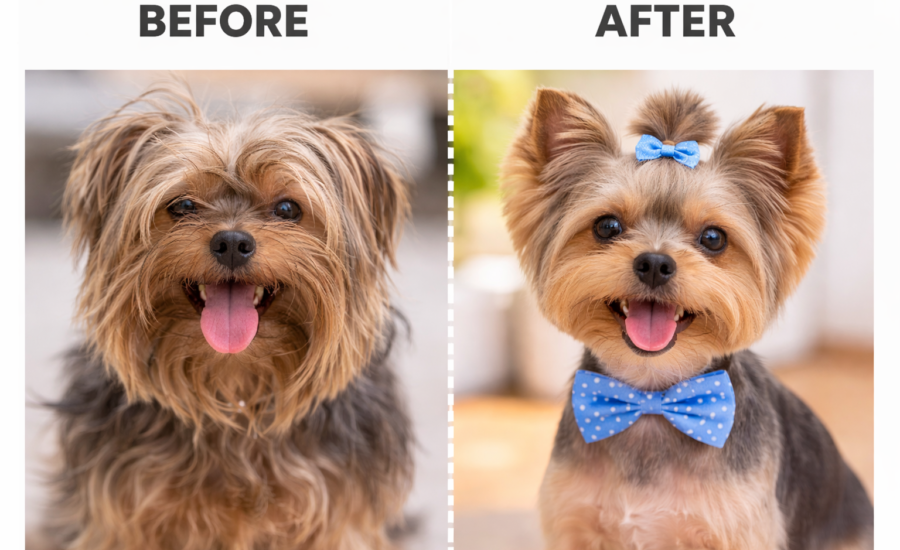
Full Dog grooming
A “Full dog grooming” refers to a comprehensive grooming session that involves a wide range of tasks aimed at maintaining a dog’s cleanliness, appearance, and overall well-being. This type of grooming is more extensive than a “mini grooming” and often includes a thorough cleaning and maintenance of the dog’s coat, skin, nails, ears, and more. The specific tasks involved can vary based on the dog’s breed, coat type, and individual needs, but generally, a full grooming session might include:
- Brushing and Detangling: Thoroughly brushing the dog’s coat to remove tangles, mats, and loose fur. This helps maintain a healthy coat and prevents discomfort.
- Bathing: Giving the dog a complete bath using appropriate dog shampoo and conditioner to clean the coat and skin.
- Drying: Drying the dog’s coat using a blow dryer or other drying methods to prevent moisture-related issues.
- Haircut or Trimming: For dogs with hair that grows continuously, like poodles or terriers, a haircut or trimming might be necessary to maintain a specific style or length.
- Nail Trimming: Trimming the dog’s nails to an appropriate length to prevent discomfort and potential health issues.
- Ear Cleaning: Cleaning the ears to prevent ear infections and remove excess wax.
- Sanitary Area Cleaning: Trimming and cleaning the hair around the genital and anal areas for hygiene purposes.
- Teeth Cleaning: Brushing the dog’s teeth to maintain dental health. This might be done by the owner or by a professional groomer.
- Eye Area Cleaning: Gently cleaning around the eyes to remove any debris and prevent eye irritation.
- Styling and Finishing: If applicable, styling the dog’s coat according to the desired breed-specific or owner-preferred style.
- Scented Spritz or Cologne: Applying a light dog-safe scented spray or cologne to give the dog a pleasant fragrance.
- Checking for Skin or Coat Issues: The groomer might inspect the dog’s skin and coat for any signs of issues like rashes, hot spots, or infections.
A full Dog grooming session is typically recommended every 4–8 weeks, depending on the dog’s breed, coat type, and how fast their hair grows. It not only helps the dog look and feels better, but also contributes to their overall health and comfort. Many dog owners choose to take their dogs to professional groomers for full grooming sessions, while some also learn to perform these tasks at home.
**Georgia Department of Agriculture Standards for Pet Care Facilities**
*(Kennel, Boarding, Grooming with Overnight Care – Regulated under the Georgia Animal Protection Act & Rule 40-13-13)*
Licensed facilities must provide a **hygienic, safe, and humane environment** for dogs, cats, and other companion animals kept for compensation (boarding, training, breeding, etc.). Key minimum standards include:
**Primary Enclosures & Space Requirements**
– Sufficient room for each animal to turn freely, stand, sit, lie down comfortably, and stretch without touching sides, other animals, or waste.
– Interior height: at least 6 inches (15 cm) above the head of the tallest animal in normal standing position.
– Solid, moisture-impervious, cleanable floors (no grated/mesh bottoms for dogs/cats except temporary use).
– Strong construction to prevent escape, injury, or unauthorized entry.
**Hygiene & Sanitation**
– Daily cleaning and removal of excreta, soiled bedding, and waste to prevent disease and odors.
– Regular disinfection using approved methods (detergents, disinfectants, hot water ≥145°F / 63°C).
– Effective drainage to eliminate standing water; pest control program to manage vermin, insects, and parasites.
– Clean, dry bedding replaced as needed; food and supplies stored to avoid contamination.
**Ventilation & Temperature Control**
– Adequate fresh air circulation (natural or mechanical) to minimize drafts, odors, moisture, and condensation.
– Indoor ambient temperature maintained between 45°F (7°C) and 85°F (29°C) for non-acclimated animals (with exceptions).
– Outdoor access: shade, weather protection, dry shelter during rain/snow, wind barriers, and sufficient bedding.
**Safety & Humane Care**
– Secure separation of aggressive/vicious animals (housed individually) and isolation of sick/infectious animals.
– Compatible grouping only; no permanent tethering (>24 hours prohibited).
– Facilities in good repair, well-lit, with fire safety equipment and emergency evacuation plans.
– No release of injured or diseased animals without full disclosure.
**Additional Obligations**
– Maintain accurate records (animal intake/output, owner info, health/vaccination status) for at least 12 months.
– Annual license renewal required; facilities subject to unannounced inspections by GDA.
– Compliance with local zoning/ordinances (e.g., in Atlanta/Fulton County) is also mandatory.
For full details and current rules:
– Visit: [agr.georgia.gov/kennel-licenses](https://agr.georgia.gov/kennel-licenses)
– Rules: [Georgia Administrative Code 40-13-13](https://rules.sos.ga.gov/gac/40-13-13)
– License search & complaints: Georgia Department of Agriculture Companion Animals Program
*These standards aim to ensure animal welfare, public health, and professional operations in Georgia pet care facilities (updated as of 2026). Always verify directly with GDA for the latest requirements.*