
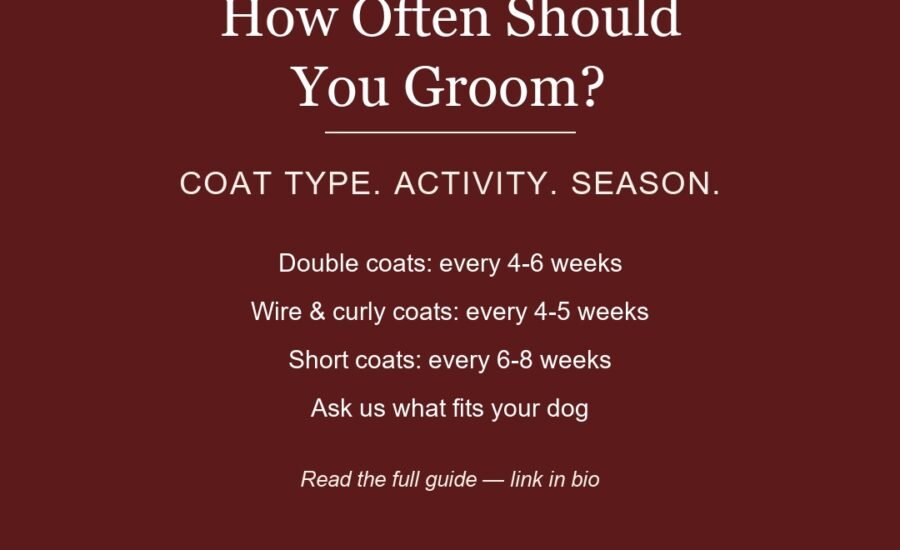
Most dog owners have heard the same rule of thumb: book a groom every 6 to 8 weeks. It’s a reasonable starting point, but it isn’t the right schedule for every dog. Coat type, activity level, and the season change how often a dog needs professional grooming. At Robin’s Groomingdales in Dunwoody, we build the schedule around the dog in front of us rather than a single number that applies to everyone.
Double-Coated Breeds: Every 4-6 Weeks
Huskies, Golden Retrievers, German Shepherds, and other double-coated breeds carry a dense undercoat that traps loose hair and can mat close to the skin if left too long. During spring and fall shedding season, closer to the 4-week mark keeps shedding manageable and prevents the undercoat from packing down. In the calmer months, 5 to 6 weeks is usually enough.
Wire and Curly Coats: Every 4-5 Weeks
Doodles, Poodles, and other curly or wire-coated breeds don’t shed the way double coats do, but their hair keeps growing and tangling. Skip a groom past the 5-week mark and mats can form fast, especially behind the ears, under the legs, and around the collar. This schedule keeps a curly coat easy to maintain instead of a mess to untangle.
Short, Smooth Coats: Every 6-8 Weeks
Labs, Boxers, Beagles, and other short-haired breeds have the most forgiving schedule. Their coats don’t mat, and a 6 to 8 week interval is usually enough to manage shedding, keep nails trimmed, and maintain skin health. Active or frequently outdoor dogs in this category may still benefit from a slightly shorter interval.
Long, Silky Coats: Every 4-5 Weeks
Yorkies, Shih Tzus, Maltese, and similar long-coated breeds tangle easily, particularly around the face, ears, and legs. Waiting longer than 5 weeks often means more time spent working out mats instead of just maintaining the coat. A tighter schedule is usually more comfortable for the dog.
What Can Shift the Schedule
- Activity level. Dogs that swim, hike, or spend most of the day outside pick up more dirt and debris, which shortens the ideal interval.
- Skin allergies or sensitivities. Dogs prone to skin irritation often do better with more frequent baths and coat checks.
- Georgia’s humidity. Summer humidity here speeds up matting and makes skin issues harder to catch early.
- Age. Puppies and senior dogs sometimes need shorter, gentler sessions on a different interval than a healthy adult dog of the same breed.
How We Set Your Dog’s Schedule
Coat type is a useful starting point. Activity, allergies, and the season shift it further. At every visit, we check your dog’s coat condition, skin, and lifestyle, and tell you what interval makes sense going forward. Sometimes that means adjusting from what you’ve always booked, and that’s fine. The goal is a schedule that keeps your dog comfortable.
📍 Robin’s Groomingdales
2482 Jett Ferry Rd, Dunwoody, GA 30338
📞 (770) 396-8902
🌐 Book online at robinsgroomingdales.us
🕰️ Monday–Saturday, 8:30 AM – 3:00 PM