
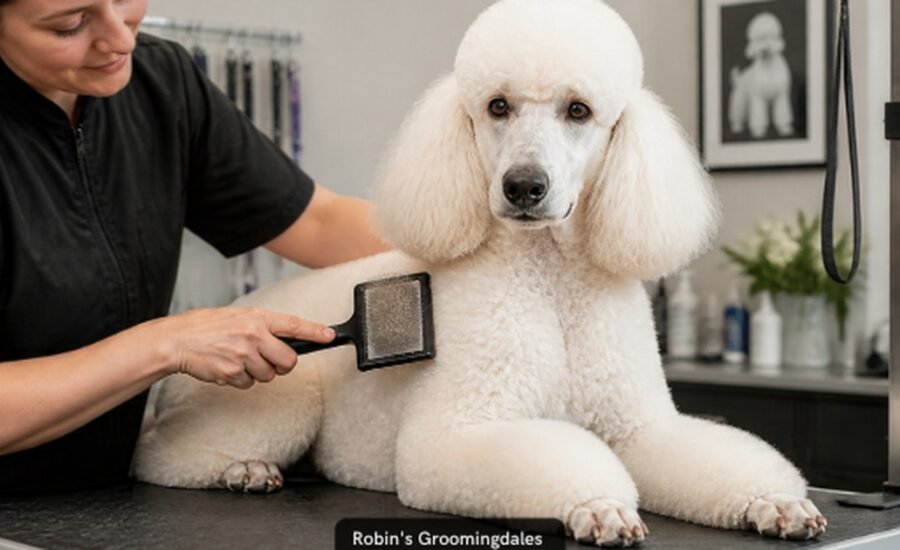
You brush your dog before every grooming appointment, and the groomer still finds mats. It happens all the time. Most pet owners assume they’re brushing wrong, too fast or too rough. But the problem starts with something none of us think to question: the brush itself.
At Robin’s Groomingdales in Dunwoody, we see the same pattern week after week. A dedicated owner brushes with the same tool every time and still brings in a dog with hidden tangles close to the skin. It’s fixable, once you know where the mistakes happen.
Why Surface Brushing Creates a False Sense of Progress
The most common brushing mistake is technique. Most pet owners run a slicker brush over the top layer of their dog’s coat, smoothing the outer fur until it looks neat. Underneath, a compressed layer of loose hair and early mats builds up session after session. Groomers call this “surface brushing,” and it’s the number-one reason dogs arrive at the salon more tangled than their owners expected.
Surface brushing feels productive because the top coat responds right away. The brush glides, the fur fans out, and the dog looks groomed. But a Poodle’s curly coat, for example, traps shed hair in tight spirals close to the skin. A surface pass never reaches those spirals. Over days and weeks, the trapped strands compress into felt-like mats that pull against the skin and restrict airflow. By the time you feel them with your fingers, they’ve been forming for a while.
The fix is called line brushing. Part the coat in a straight line down to the skin, then brush outward from the roots in small sections, working your way across the body. It takes longer than a quick surface pass, but it catches loose hair where it accumulates, at the base of the coat.
Picking the Wrong Brush for Your Dog’s Coat Type
Not every brush works on every coat. A bristle brush that glides through a Labrador’s short, flat fur won’t penetrate a Poodle’s dense curls. A pin brush that works on a Cavalier King Charles Spaniel’s silky waves can snag and break a wiry terrier coat. The wrong tool can create tangles, roughing up the hair cuticle and making strands stick to each other faster.
Match the tool to the coat:
Curly and wool-textured coats (Poodles, Goldendoodles, Labradoodles): Use a slicker brush for daily detangling and a steel comb afterward to check for missed knots. If the comb catches anywhere, you’re not done.
Long, silky coats (Shih Tzus, Yorkshire Terriers, Maltese): A pin brush handles length without breaking the hair. Follow up with a wide-tooth comb through the feathering and behind the ears, where mats form first.
Double coats (Golden Retrievers, Huskies, Australian Shepherds): An undercoat rake pulls loose underfur without cutting the guard hairs. During shedding season, this is the only tool that reaches the layer doing the shedding.
Short, smooth coats (Beagles, Dachshunds, French Bulldogs): A rubber curry brush loosens dead hair and distributes oils. These coats don’t mat, but skipping regular brushing lets shed hair build up in furniture, clothes, and car seats instead.
The Spots You’re Probably Skipping
Even owners who brush thoroughly tend to focus on the back and sides, the places that are easy to reach and where the dog holds still. The spots that mat fastest are elsewhere.
Behind the ears. Friction from lying down and collar contact compresses this hair all day. On a Poodle or a Doodle, the area behind each ear can mat solid in under a week without brushing.
Armpits and inner thighs. The friction zones where the legs meet the body are the first places a groomer checks. They’re also the hardest for owners to reach because most dogs don’t love having these areas handled. A few gentle passes with a small slicker brush, followed by a treat, prevents mats that otherwise require shaving.
Under the collar or harness. Any area where a strap sits against the coat compresses and rubs the fur every time the dog moves. If your dog wears a harness daily, remove it at home and brush the chest panel area at least every other day.
The base of the tail. For breeds with feathered or curly tails (Poodles, Havanese, Bichon Frisés), the spot where the tail meets the body collects debris and tangles within days. Most owners don’t think to brush here because the tail itself looks fine.
Between the paw pads. This isn’t a brushing area so much as a trimming one, but matted fur between the pads is something we see every week. It traps moisture, collects mulch and gravel, makes walking uncomfortable. A monthly trim with blunt-tip scissors keeps it clean. If you’re not comfortable trimming between the pads yourself, mention it at your next grooming appointment. We include it in every full groom at Robin’s Groomingdales.
How Often Between-Groom Brushing Needs to Happen
It depends on your dog’s coat type and length, not a universal rule. Breed-specific frequency matters more than a blanket “brush every day” recommendation that few owners maintain.
Curly and wool-textured coats in a longer style: Every day, or every other day at minimum. These coats don’t shed onto the floor. The loose hair stays tangled in the curls, forming mats from the inside out. A Poodle kept in a longer continental or lamb clip needs daily attention, especially during humid Georgia months when moisture speeds up the matting process.
Curly coats in a short clip: Two to three times a week. Less fur to tangle, but the structure still traps debris. A Miniature Poodle in a short kennel clip still needs the friction zones (ears, armpits) checked twice a week.
Long, silky coats: Every other day. These coats tangle more than they mat. Individual strands wrap around each other rather than compressing into felt. Catching tangles early means a 3-minute brushing session. Waiting a week turns it into a 20-minute detangling ordeal that neither you nor your dog enjoys.
Double coats: Once or twice a week during non-shedding months. Daily during spring and fall coat blows. A German Shepherd dropping its winter undercoat in March can fill a grocery bag with loose fur in one session. If that fur doesn’t come out via brushing, it packs down against the skin and restricts airflow.
Short, smooth coats: Once a week with a rubber curry or grooming mitt. This is less about tangles and more about controlling where the shed hair ends up.
What to Do When You Find a Mat
You’re brushing, the comb catches, and there’s a tight knot close to the skin. Resist the urge to pull it apart with the brush. That hurts, and your dog will remember. Next time you reach for the brush, they’ll leave the room.
For small mats, hold the base of the mat against the skin with your fingers (so you’re pulling against your hand, not the skin) and work the edges loose with a steel comb. Start at the outer edge of the tangle and work inward, picking apart a few strands at a time. A dab of detangling spray helps the comb slide through without ripping.
For larger or tighter mats, don’t try to save them. A mat compressed flat against the skin pulls all day, restricts blood flow, and traps moisture that can cause irritation or skin infections. Let your groomer clip it out with professional clippers. It takes seconds and doesn’t hurt. The coat grows back. The trust your dog loses from a painful at-home mat-pulling session takes much longer to rebuild.
If mats keep showing up between grooms, either the at-home routine needs adjusting or the coat length is beyond what your schedule can maintain. Your groomer can recommend a shorter style that stays manageable between appointments without giving up the look you want. At Robin’s Groomingdales, we have that conversation with clients every week. It comes down to balancing the style you love with the brushing you can do at home.
Building a Brushing Routine Your Dog Tolerates
The best brushing schedule is the one that happens. If your dog dreads the brush, you’ll skip sessions. Skipped sessions compound fast on a curly or long coat.
Start with short sessions: two or three minutes, focused on one body section, followed by a treat. Over a week or two, extend the time as the dog learns that brushing ends with something good. Brushing on an elevated surface (a grooming table, a rubber mat on a counter) changes the dog’s mindset. They associate the height with “grooming mode” rather than “play mode,” which reduces the wiggling and mouthing that makes brushing feel impossible on the living room floor.
Keep the brush where you’ll see it. If it lives in a bathroom cabinet, it’s out of sight and out of mind. A slicker brush hanging on a hook by the back door, right where you clip the leash, serves as a visual reminder. Some of our clients brush their dog for three minutes after every evening walk. The brush was right there when they unclipped the leash, so it became habit.
If your dog won’t tolerate brushing at home despite patient conditioning, your groomer needs to know. More frequent appointments, every three to four weeks instead of every six to eight, can compensate for what’s not happening at home. The coat stays short enough that mats don’t have time to form. It costs more per year, but it costs less stress for everyone involved.
Robin’s Groomingdales has been serving Dunwoody pet owners since 1980. If you’re unsure which brush suits your dog’s coat, bring the one you’re using to your next appointment. We’ll tell you if it’s the right tool and show you the line-brushing technique on your dog so you can see the difference.