
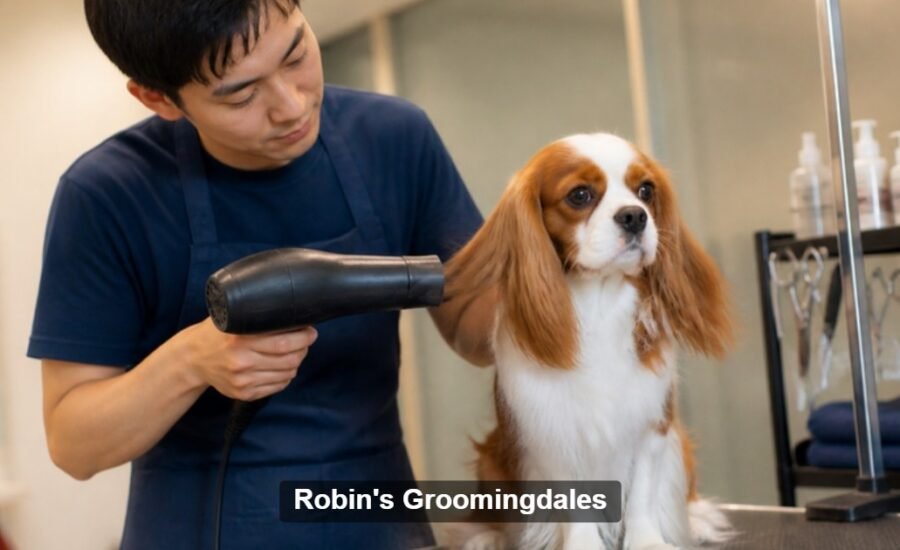
Most owners drop their dog off at the grooming salon, drive away, and come back two hours later to a transformed pup. That gap between drop-off and pickup is a full production. Seven distinct stages, each one calibrated to your dog’s breed, coat condition, and temperament. At Robin’s Groomingdales in Dunwoody, we’ve been running this process since 1980, and no two sessions look the same.
What Happens During a Full Dog Grooming Session
A full groom covers seven stages: check-in assessment, pre-bath brushing, the bath itself, drying, the haircut, finishing work on nails and ears, and a final quality check. Skip any of them and the result shows it. The sequence takes roughly 90 minutes to two hours for most breeds, longer for dogs with thick or matted coats.
How the Check-In Assessment Shapes Your Dog’s Entire Groom
Before clippers or water touch your dog, the groomer has a conversation with both you and your pet. We look at the coat’s current condition, check the skin for irritation or lumps, and note mats or tangles that need attention. A Cavalier King Charles Spaniel with a silky, feathered coat needs different handling than a Goldendoodle with a curly wool texture. This five-minute evaluation shapes what follows: which blade guard, which shampoo, how long the deshedding pass runs.
Dogs who seem nervous get extra time to settle in before anything starts. The assessment also catches problems owners miss: a mat forming behind the ear, or a skin tag that’s doubled in size since the last visit. We flag these at pickup so you can watch for them between appointments.
Pre-Bath Brushing Removes What Water Would Lock In
Wet tangles turn into cement. The groomer starts with a dry brush-out, working through the coat section by section with the right tool for the hair type. A slicker brush handles curly and wavy coats. A pin brush works best for silky breeds like Cavaliers. A de-matting comb tackles anything that’s gone too long between appointments.
This step takes 10 to 20 minutes depending on how much the coat has tangled since the last groom. Skipping it means the bath pushes tangles tighter against the skin, and the only fix at that point is shaving closer than anyone wanted. The pre-bath brush also gives the groomer a second pass at the skin, catching anything the check-in assessment missed.
The Bath Goes Deeper Than Shampoo and Rinse
The bath at Robin’s Groomingdales involves two separate washes. The first lifts dirt, oils, and outdoor debris from the coat. The second targets the specific needs of that dog’s coat and skin: moisturizing for dry skin, brightening for white coats, medicated formulas if the vet has prescribed them. Water temperature stays lukewarm, never hot. Dogs regulate body heat through panting rather than sweating, so a warm tub overheats them faster than you’d expect.
We work the shampoo down to the skin rather than sudsing the surface, and each rinse cycle runs until the water comes out clear. Leftover shampoo residue causes itching and flaking within a day or two. Owners often blame that reaction on a food allergy. More often, the cause was a rushed rinse.
Why Drying Takes Longer Than Owners Expect
After the bath, most of the grooming time goes into drying. Air-drying leaves the coat wavy, tangled, and uneven, and it traps moisture against the skin where bacteria breed. Professional high-velocity dryers blow the coat straight while removing loose undercoat at the same time. This is the step that turns a wet, flat-looking dog into the fluffy result you see at pickup.
For a breed like the Cavalier King Charles Spaniel, with its long feathering on the ears, chest, and legs, drying takes 20 to 30 minutes of careful, section-by-section work. The groomer brushes through the coat while drying, detangling in the same motion. Each section has to be bone-dry before the haircut starts. Cutting wet hair leads to uneven lengths once it dries and shrinks back.
How Breed and Coat Type Determine the Haircut
Once the coat is dry and brushed smooth, the groomer can see the full picture and make precise cuts. The groomer’s breed knowledge drives this stage. A Cavalier’s coat gets a specific outline: the body trimmed to maintain the breed’s natural silhouette, the ear feathering shaped, the paws rounded, and the sanitary areas clipped clean. A Poodle or Goldendoodle gets clipper work on the body and scissor finishing on the face and feet.
We discuss length and style preferences at drop-off, but the groomer also factors in the coat’s current health. A matted coat can’t be saved with a long cut. Pushing a blade through dense mats pulls the skin and risks nicking it. In those cases, we call before we clip so you’re never surprised by the result.
Nails, Ears, and the Details That Separate a Good Groom From a Forgettable One
The groomer spends the last 15 to 20 minutes on finishing details. She trims and Dremels the nails smooth so they don’t scratch your floors or furniture. She cleans the ear canals and checks for redness or excess wax buildup that signals a vet visit. A final clip on the sanitary areas and paw pads wraps up the hands-on work.
Then she does a full brush-through of the finished coat, checking for symmetry and any spot that didn’t dry flat. A spritz of finishing cologne and a bandana or bow (your call) close out the session. Before your dog comes back to you, we run one more skin-and-coat check.
Why the Full Process Takes Two Hours
Cut any step short and you see the consequence. Skip the pre-bath brush and tangles lock in. Rush the rinse and the dog itches for days. Start cutting before the coat is dry and the shape falls apart by evening. A 20-minute express groom at a big-box pet store cleans the surface, but it won’t reach the skin or catch the lumps a groomer should flag.
Two hours buys thoroughness. Robin’s Groomingdales has run on that principle since 1980, and the dogs who come back on a four-to-six-week cycle are the proof. Book your next appointment at robinsgroomingdales.us or call us at (770) 458-0007.